

How to Choose an Industrial Hot Press Machine: A Buyer’s Guide
Choosing an industrial hot press machine starts with the material, tooling and finished-part requirements. The right machine must deliver the required force, temperature history and handling sequence across the actual production load. Maximum tonnage and maximum temperature are only part of that decision.
Introduction
Choosing an industrial hot press machine starts with the material, tooling and finished-part requirements. The right machine must deliver the required force, temperature history and handling sequence across the actual production load. Maximum tonnage and maximum temperature are only part of that decision.
This matters because two presses with similar headline specifications can behave differently in production. One may accommodate the mold but leave insufficient loading access. Another may reach the required platen temperature while the material inside a heavy tool heats too slowly. A third may complete an impressive demonstration cycle without meeting the inspection requirements that determine whether a part can be shipped.
For overseas buyers, these technical questions also affect quotation accuracy, factory testing, shipment inspection and installation preparation. Resolving them before an order helps reduce misunderstandings between purchasing, production and the equipment supplier.
This guide explains how to turn customer requirements into a practical equipment specification, compare proposals and define evidence for acceptance.
Define the Product Application Before Selecting the Press
Begin with a short application brief describing what you intend to manufacture.
Include the material designation, layer structure, finished dimensions, thickness tolerance and intended production volume. Identify whether the operation involves adhesive bonding, thermoset curing, thermoplastic consolidation or another process.
These applications do not share one universal temperature-and-pressure recipe. A material that bonds through a heat-activated adhesive behaves differently from a prepreg that cures chemically. A compressible insulation assembly may also require a different approach to thickness control than a rigid molded component.
Attach the material supplier’s processing instructions where available. If the process is still under development, identify the unresolved questions explicitly.
For example, “the adhesive activation window is confirmed, but cooling under pressure requires trials” gives the supplier a more useful starting point than “we need a machine for composite materials.”
Also describe downstream operations. A laminated part may need welding, trimming, assembly or electrical inspection. The press process must preserve the features those operations depend on.
Calculate Force from the Relevant Loaded Area
Understand force and pressure
Press force describes the total closing load. Material pressure describes how that load is distributed over an area.
For an idealized, uniformly loaded flat stack:
Force = Pressure × Loaded Area
Using common engineering units:
Force in kN = Pressure in MPa × Area in mm² ÷ 1,000
Consider an illustrative process requiring 2 MPa over a 300 × 300 mm loaded area:
- Loaded area: 90,000 mm².
- Calculated force: 180 kN.
- Equivalent load: approximately 18.4 metric tonnes-force.
This calculation explains the relationship; it is not a recommended processing pressure or final machine selection.
The relevant area must match the process and tooling. Depending on the mold, force may also be carried by stops, flash lands, sealing features or other contact surfaces. Dividing total force by the finished-part footprint can therefore give a misleading estimate.
Check the usable operating range
A machine’s maximum force does not describe its control performance at every lower setting.
Ask the supplier to confirm the controllable range, measurement method and load stability at your intended operating points. Distinguish hydraulic circuit pressure from closing force and pressure on the material.
This distinction also appears in equipment manufacturers’ technical guidance: specific pressing pressure depends on sample or mold size, rather than force alone.Fontijne Presses technical FAQ
Size the Platens Around the Complete Tooling Arrangement
Platen dimensions must accommodate more than the finished part.
Account for the mold base, locating features, insulation plates, release materials, fixtures and connections. Check whether thermocouple leads, vacuum hoses or cooling lines need protected routes.
A tool that physically fits between the columns may still be difficult to load safely. Request a general arrangement drawing showing the working envelope, access points and maintenance clearances.
Check opening, stroke and tool height separately
Daylight, stroke and mold height describe different constraints.
Daylight concerns the available opening between working surfaces. Stroke describes available movement. Tool height determines how the closed tooling fits within the operating arrangement.
Review these dimensions together with the loading method. A manually handled flat stack may need a different opening from a tall matched mold loaded by a trolley.
Include mold weight and center of gravity. Handling equipment, support tables and loading arrangements should be selected around the actual tool, especially when operators will change molds frequently.
Specify Temperature Performance at the Process Level
A controller displaying the target temperature does not prove that every critical location in the material has reached it.
Separate four requirements:
| Requirement | What it tells the buyer |
|---|---|
| Operating range | Whether the equipment covers the intended process temperatures |
| Stability | How temperature behaves over time at a defined measurement point |
| Uniformity | How temperature varies across an agreed working area |
| Loaded response | How the tool and material heat during the actual cycle |
Ask how each requirement will be measured. Define sensor locations, stabilization conditions, loaded or unloaded status and the part of the platen included in the assessment.
Heavy tools and uneven material stacks can create thermal lag. A trial should therefore distinguish platen measurements from relevant tool or product measurements.
For temperature-sensitive materials, also discuss overshoot during transitions. A suitable steady-state reading may conceal a temporary excursion outside the acceptable processing window.
Specify the performance the product needs, together with the test method. An unexplained claim of “high temperature accuracy” is difficult to compare or verify.
Review Heating and Cooling as One Production Sequence
Heating capacity affects how quickly the process can reach its working conditions. Cooling affects cycle completion, handling and dimensional stability.
Determine whether cooling must occur while the part remains under pressure. If so, confirm that the proposed arrangement supports the required sequence.
Ask the supplier to explain which heating and cooling rates refer to the platen, mold or material. These values are not interchangeable.
Also identify utility assumptions. Cooling performance may depend on water temperature, flow, pressure and water quality. A demonstration using chilled water may not represent a factory operating with warmer cooling water.
For externally heated tooling or preheated materials, include transfer time and temperature loss. A fast press movement cannot compensate for a blank that arrives below its required forming window.
The useful specification describes the complete thermal sequence and its boundary conditions, rather than listing heating power and cooling connections separately.
Choose the Press Configuration Around Workflow
Single-opening, multi-opening and multi-station arrangements serve different production needs.
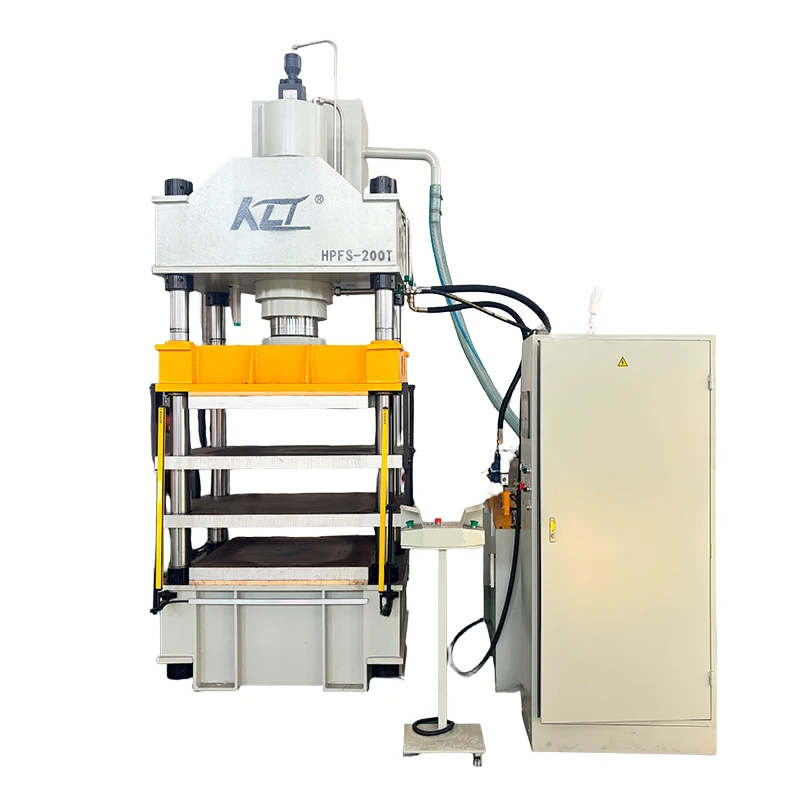
A single-opening press may offer straightforward access for development work or frequent tool changes. A multi-opening press can process several stacks within one machine, but loading time, opening utilization and thermal differences require attention.
A multi-station arrangement may allow preparation, heating, pressing or cooling tasks to overlap. Its value depends on how those tasks connect.
Do not assume that more openings automatically multiply saleable output. Operators must load and unload them, tooling must be available, and each stack must meet acceptance criteria.
Similarly, the number of openings does not automatically multiply the force required from a common load path. The machine structure, hydraulic arrangement and tooling determine how force is transmitted. Request the supplier’s load explanation for the proposed configuration.
Evaluate the arrangement using your actual product mix. A machine optimized for one long-running product may be less convenient when several tools and recipes change throughout a shift.
Specify Controls and Records That Support Quality
Decide what the operator must control and what the quality team must retrieve later.
Potential requirements include staged force application, temperature ramps, dwell timing, controlled release and recipe identification. Where process data are needed, define the recorded channels and their relationship to actual measurements.
A useful record should identify the cycle, recipe revision, time, relevant measured values and any alarms. Confirm the sampling interval, export format and storage arrangement.
Ask to review an example data file during the quotation stage. A screen showing a curve does not necessarily mean the underlying values can be exported in a usable form.
Define how recipes are changed and who can approve them. Uncontrolled adjustments can make it difficult to explain why two batches produced different results.
Keep the controls proportionate to the application. Select functions because they support repeatable production or customer requirements, rather than because a feature list appears comprehensive.
Convert Cycle Time into Saleable Output
Compare production capacity using the complete repeat cycle.
Include loading, closing, heating, holding, cooling, opening and unloading. Where activities overlap, model the overlap explicitly instead of adding or removing time without explanation.
An illustrative calculation is:
Good parts per hour = Parts per cycle × 60 ÷ Cycle time in minutes × Availability × First-pass yield
If a hypothetical process makes four parts every 12 minutes, with 85% availability and 95% first-pass yield:
4 × 60 ÷ 12 × 0.85 × 0.95 = approximately 16.2 good parts per hour
These are planning assumptions, not equipment performance claims.
Check the definition of availability so downtime is not deducted twice. Include tool cleaning, material preparation and product changeovers where they affect the production plan.
Finally, inspect the bottleneck outside the press. Cutting, lay-up, welding or final inspection may constrain output even when additional pressing capacity is available.

Discuss Your Hot-Press Project
Share your material, part dimensions and production goal to discuss a project-specific equipment proposal.
Send Your RequirementsPrepare a Comparable Request for Quotation
A useful request for quotation separates confirmed requirements, optional functions and open development questions.
Ask each supplier to state what is included, excluded and dependent on further trials.
| RFQ item | Information to provide or request |
|---|---|
| Material | Designation, stack structure and processing instructions |
| Tooling | Dimensions, weight, contact arrangement and loading method |
| Process | Required force, thermal sequence and holding conditions |
| Production | Product mix, output target and shift pattern |
| Acceptance | Test methods, sample quantity and approval responsibility |
| Installation | Country, utilities, access and available space |
| Support | Documentation, training, spare parts and service scope |
Price comparisons become more useful when suppliers quote the same technical scope.
Need help organizing your requirements?
Send KLT your material information, part drawing, tooling envelope and output target. Identify which process conditions are confirmed and which require review.
Agree the Factory Acceptance Test Before Production
Factory testing should verify agreed requirements through a written procedure.
Define whether the test covers equipment functions, representative material processing or both. Identify who supplies the material and tooling, how samples are selected and which measurements determine acceptance.
A practical plan may include checking control functions, relevant temperature measurements, force behavior, cycle records and repeated production runs.
One successful sample demonstrates less than a documented sequence showing how the process behaves across representative cycles. The required run length should reflect the application and the confidence needed for approval.
Record trial conditions, including material batch, tool revision, utility conditions and any deviations. If substitute materials are used, state what the trial can and cannot establish.
For overseas projects, agree the evidence format in advance. Video, photographs and raw records can support remote review, but they should correspond to the same identified test sequence.
Separate Shipment Inspection from Process Acceptance
Shipment inspection verifies the condition and completeness of the equipment being dispatched. It does not replace application testing.
Before packing, check the machine identity, agreed accessories, spare parts, documentation and outstanding corrective actions.
Confirm that sensitive surfaces and components receive appropriate protection for the shipping route. Packing and preservation should account for handling, storage duration and environmental exposure.
Request photographs that show equipment identity and packing stages without implying that a photograph proves every contractual requirement.
Keep the packing list aligned with the actual shipment. Clearly identify items packed separately, such as control cabinets, loading tables or tooling.
If a third-party inspection is required, define its scope early. An inspector needs measurable acceptance criteria; “check machine quality” is too broad to produce a reliable conclusion.
Plan Installation and Compare Total Cost
Installation preparation should begin before dispatch.
Confirm electrical supply, cooling utilities, compressed air where applicable, equipment weight, floor requirements and the unloading route. Verify door dimensions, lifting access and space for service work.
Assign responsibility for connection work, commissioning materials, operator training and site acceptance. State when warranty periods begin and how technical support will be provided.
Compare total cost over an agreed period, including tooling, shipping, installation, utilities, consumables, maintenance and expected downtime. Where suppliers quote consumption figures, ask what operating conditions produced them.
A lower purchase price may still suit the project, but it should be evaluated alongside differences in scope and operating requirements.
Document assumptions rather than converting uncertain savings into guaranteed returns. A transparent cost model makes it easier for engineering and purchasing teams to reach the same decision.
FAQ
How much tonnage does an industrial hot press need?
Calculate the required force from the specified pressure and relevant loaded area, then have the supplier review the tooling load path and operating range. Maximum tonnage alone is insufficient.
Is platen size the same as pressing area?
No. The platen supports the tooling arrangement, while the pressure calculation depends on the relevant loaded area. Mold stops and other contact features may affect force distribution.
Do all hot-press applications need vacuum?
No. Vacuum may help a particular process remove air, but its value depends on the material, tooling and evacuation path. Confirm the need through application review or trials.
Can one machine process different materials?
Potentially, if its operating range, tooling and control functions cover each approved process. Different materials may require separate recipes, handling procedures and validation.
What should I send before requesting a quotation?
Provide the material designation, layer structure, drawings, tooling dimensions, known processing conditions, output target and installation country. Mark unresolved requirements clearly.
Should factory testing use my own material?
Representative production material and tooling provide more relevant evidence. If substitutes are necessary, agree their purpose and the limits of the resulting conclusions.
Conclusion
Choose an industrial hot press by connecting material behavior, tooling, process control and production workflow.
A strong purchasing decision explains how force is calculated, where temperature matters, how cooling completes the cycle and what evidence will demonstrate acceptance. It also addresses shipment, installation and support responsibilities before they become urgent.
The most useful quotation is the one that makes these relationships clear enough for both engineering and purchasing teams to evaluate.
Discuss Your Hot-Press Project
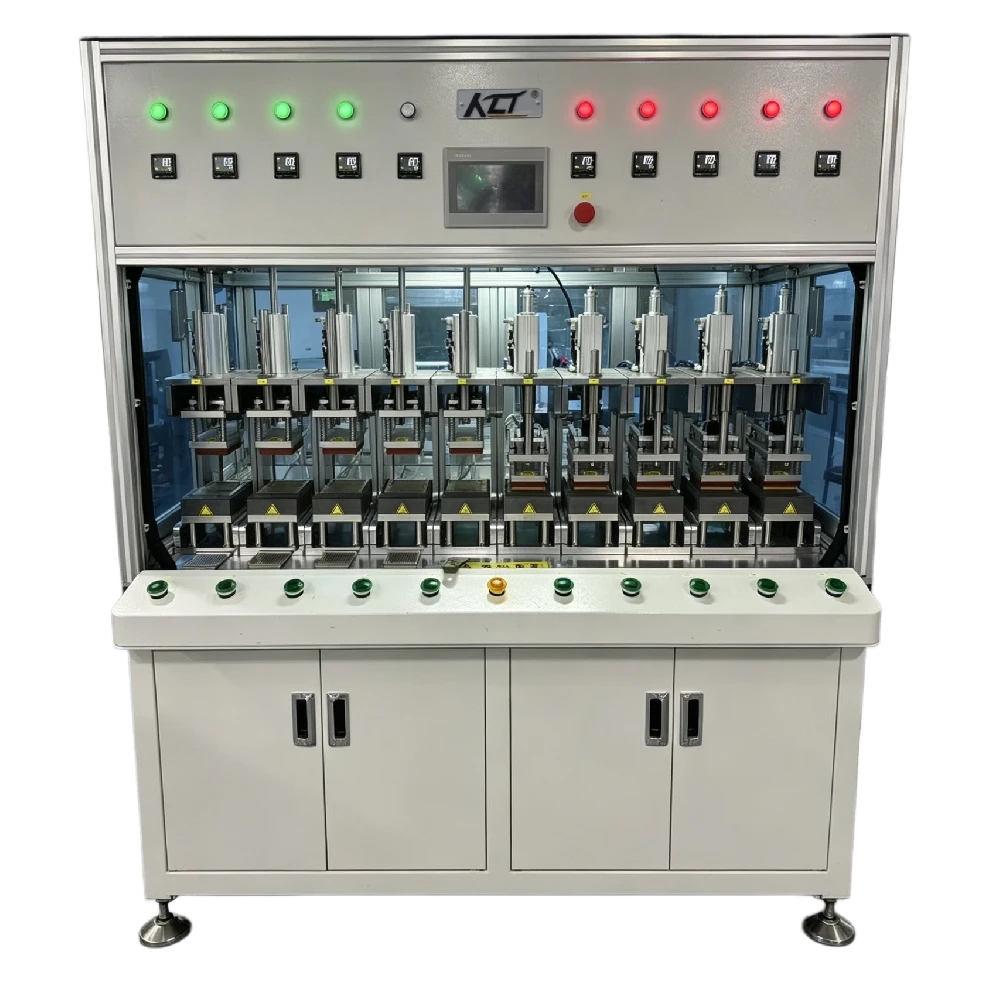
KLT’s equipment range covers CCS busbar lamination, aerogel composite lamination and carbon fiber molding applications. Share your material instructions, drawings, process targets and installation requirements to begin a project-specific equipment discussion.
Continue your equipment review
Discuss Your Hot-Press Project
Share your material, part dimensions and production goal to discuss a project-specific equipment proposal.
