
From sample trials
to parallel production.
A closer look at the customer’s requirements, the press configuration and the results reported for this installation.
The customer & production brief
The customer is a Shanghai-based carbon-fiber composite technology company founded by a Shanghai Jiao Tong University professor team. Its capabilities span component design, forming and inspection, with work across aerospace, industrial UAVs and commercial space applications.
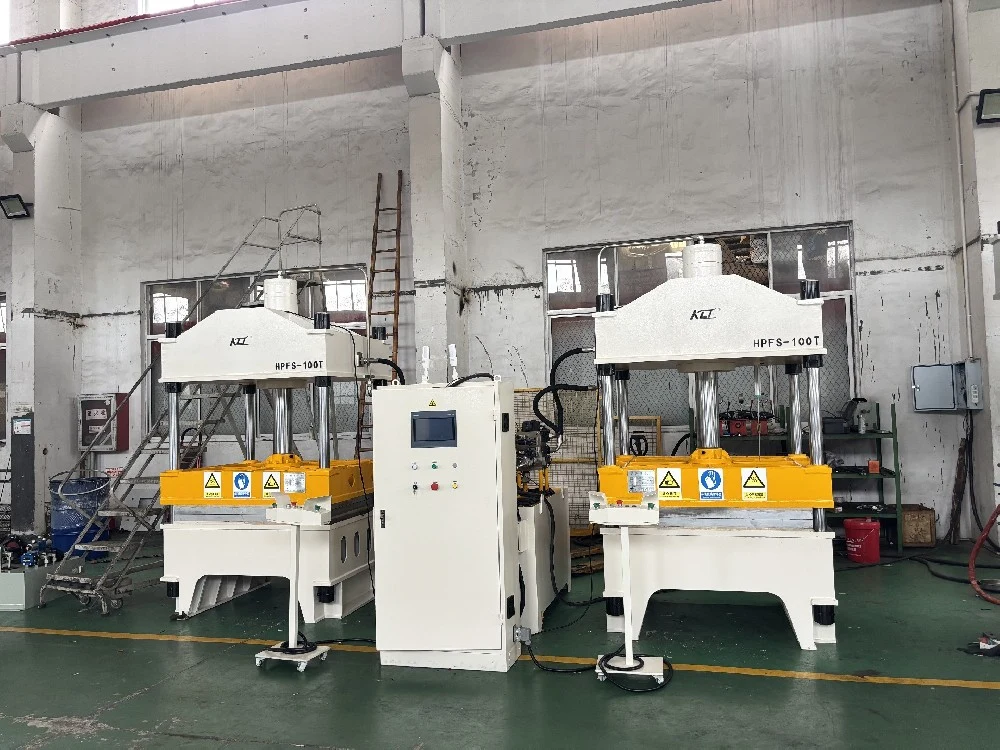
Growing orders for multirotor and fixed-wing UAVs increased demand for lightweight fuselages, wings, tail sections, landing gear and propellers. After equipment comparisons and on-site sample trials, the customer selected two KLT HPFS-100T four-column hot presses for carbon-fiber prepreg forming.
The customer’s identity is withheld in this case study. This installation focuses on carbon-fiber UAV structures and a repeatable production process.
Four challenges to resolve
Part quality: thin-wall curved components were affected by uneven pressing and inconsistent thermal conditions. The customer needed to address voids, delamination and incomplete material distribution while meeting its lightweight and mechanical-performance requirements.
Production capacity: long forming cycles and low batch output on the existing small equipment limited the supply of components for several UAV models.
Process repeatability: prepreg curing required controlled temperature ramps and staged pressure holding. The existing equipment made it difficult to standardize recipes across batches.
Tooling compatibility: curved parts and honeycomb sandwich structures required a rigid press, a suitable heated working area and access for different mold sizes.

The HPFS-100T equipment solution
Two 100-ton four-column presses were configured for the customer’s prepreg compression-molding process. The project specification described servo closed-loop pressure control, a pressure deviation within ±2% and a rigid four-column structure.
Multi-zone PID-controlled thermal-oil heating was specified with a temperature deviation within ±3°C. Programmable heating, holding and cooling stages allowed the customer to create and store separate process recipes for different UAV components.
The parallel layout separated larger fuselage components from smaller propeller and bracket parts. Fast mold closing, timed pressure holding, hydraulic cushioning and parameter recording supported the production workflow.
The platen and mold arrangement accommodated fuselage shells, wing spars, tail parts, propellers and landing-gear supports. The project scope also covered installation, commissioning, process training and on-site sample optimization.
Reported production outcomes
KLT reports that monthly carbon-fiber component capacity increased by 120% after the two presses entered production. The component forming cycle was reduced by 30%, production yield reached more than 96%, and the combined unit manufacturing cost decreased by 15%.
The supplied case record also reports that the components passed third-party aerospace-material tests and that UAV endurance improved by more than 20% at an equivalent payload. These are project-reported outcomes; the original test reports and comparison conditions are not reproduced here.
Stored and exported temperature / pressure records gave the customer’s engineering team a basis for comparing forming conditions with component test results and refining lay-ups and curing recipes for new UAV designs.
Figures supplied by KLT for this installation. Outcomes depend on the material, tooling, process and comparison conditions; they are not a general performance guarantee.
What this project demonstrates
The installation brought material instructions, mold requirements, programmable press cycles and parallel production into one workflow. It illustrates a project-specific route from sample trials to repeatable carbon-fiber UAV component production.
For a similar project, begin with the prepreg specification, part and mold drawings, target output and acceptance tests. Equipment configuration, trial results and support arrangements must be confirmed for that application.
“We needed equipment that could meet our carbon-fiber forming requirements and support volume production. The two presses helped improve the forming of curved, thin-wall UAV components, while the service team worked with us to refine the composite process.”
Translated and condensed from the supplied case record.
Case text supplied by KLT. Original project reference
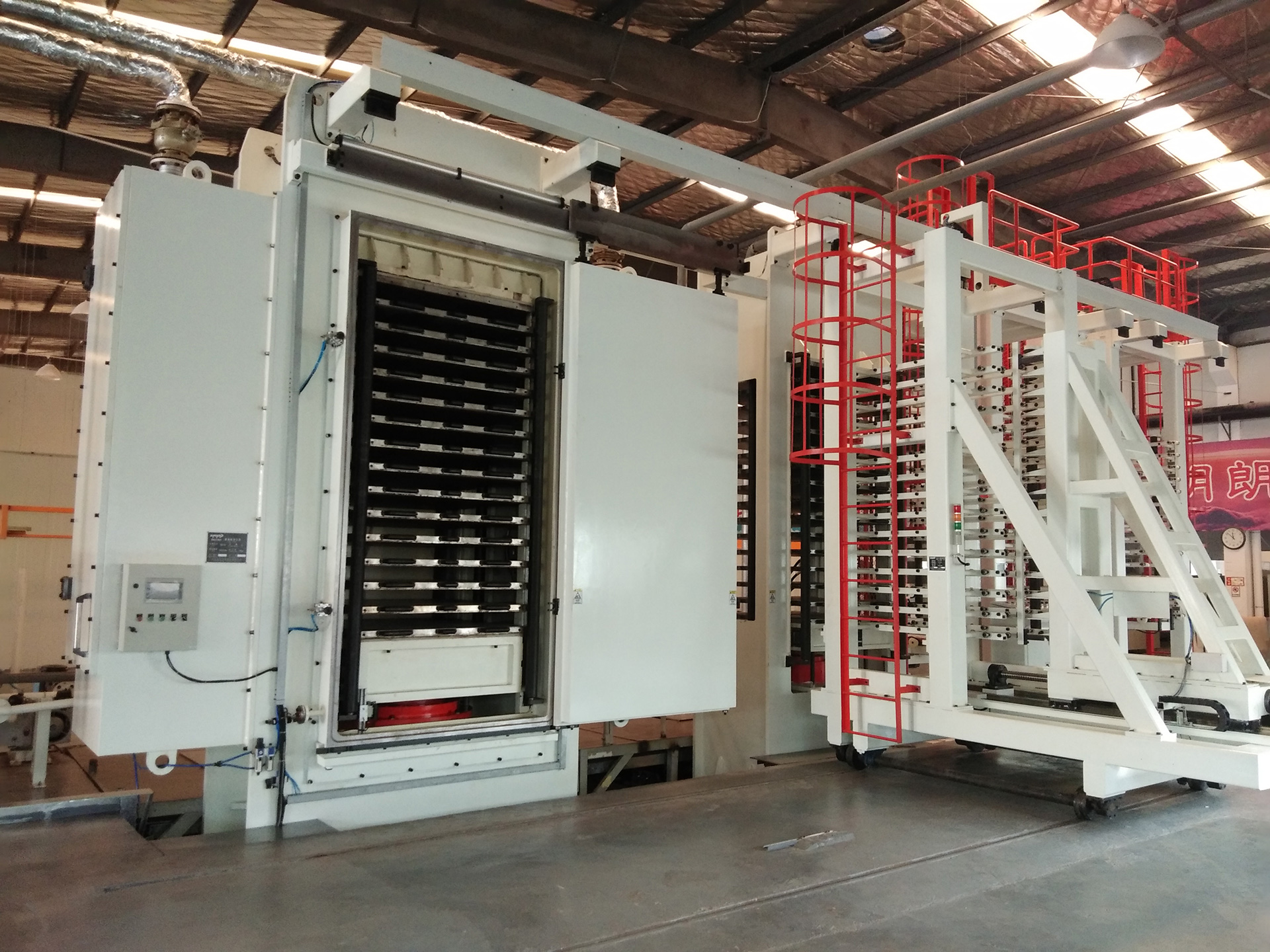
Carbon Fiber Hot Press
Hot-press equipment for carbon fiber composite molding. Define the material system, mold dimensions and process conditions before selecting a configuration.
Explore the equipmentReference equipment. Final configuration and application suitability are confirmed in the technical review.