

Carbon Fiber Hot Press vs. Autoclave: How to Choose the Right Process
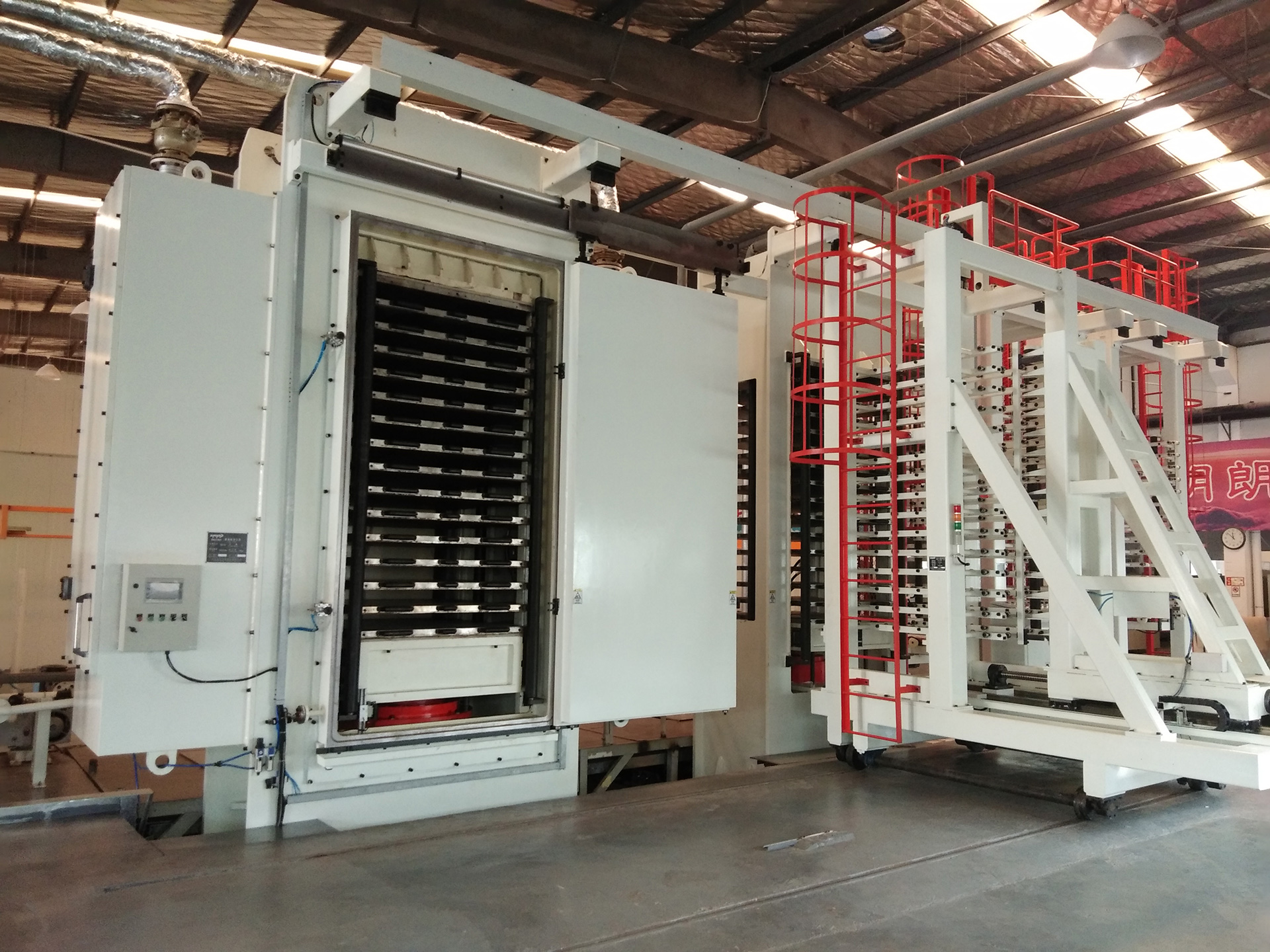
A carbon fiber hot press and an autoclave can both support composite manufacturing, but they apply heat and consolidation pressure through different arrangements.
Introduction
A carbon fiber hot press and an autoclave can both support composite manufacturing, but they apply heat and consolidation pressure through different arrangements.
A hot press transfers mechanical force through tooling. An autoclave uses a heated, pressurized environment, normally with a vacuum-bagged lay-up. The suitable route depends on the material system, component geometry, tooling, quality requirements and production plan.
Neither method is automatically superior for every carbon fiber part. A press can be attractive for compatible components produced with repeatable matched tooling. An autoclave can suit other geometries and established material processes. Customer-approved manufacturing requirements may also determine the route before equipment selection begins.
For a buyer, the useful question is therefore: which process can manufacture this component consistently, with acceptable qualification effort and cost?
This guide explains how to compare the two methods without relying on universal cycle-time, quality or savings claims.
Define What “Carbon Fiber Molding” Means for the Project
Carbon fiber identifies the reinforcement, not the complete manufacturing process.
The resin matrix and material form strongly influence processing. A continuous-fiber thermoset prepreg, a carbon-fiber sheet molding compound and a thermoplastic organosheet require different treatment.
Also distinguish molding a new component from bonding, repair or post-curing an existing laminate.
For this comparison, hot-press molding primarily means applying controlled mechanical force through heated tooling to process a compatible carbon fiber material. The exact sequence may include preforming, preheating, curing or cooling.
Autoclave molding generally involves a prepared lay-up on tooling, vacuum bagging and a specified pressure-and-temperature cycle.
Material manufacturers describe several distinct carbon fiber molding routes, including press, autoclave, oven and resin transfer molding. This variety reinforces the need to select the process around the component.Mitsubishi Chemical molding-method overview
Understand How the Pressure Reaches the Laminate
In a hot press, mechanical load passes through the tool and its contact features. Tool geometry determines how that load reaches the material.
Matched tooling can define surfaces and thickness, but local pressure does not automatically equal total force divided by the component footprint. Stops, lands, cavities and incomplete contact affect the result.
In an autoclave, chamber pressure acts around the bagged assembly. The bagging arrangement, vacuum condition, tooling and local geometry influence consolidation.
Neither arrangement guarantees uniform pressure at every location.
A bridged bag can prevent contact in an autoclave. A poorly designed matched tool can create uneven consolidation in a press.
The engineering task is to establish a reliable pressure path for the actual component. Compare the two routes through tooling review and representative trials, rather than treating their pressure readings as directly interchangeable.
Confirm Material Compatibility Before Comparing Equipment
Thermoset materials
Thermoset processing involves a curing reaction. The material’s flow behavior, reaction rate and approved cure schedule determine the useful manufacturing window.
An existing autoclave cure cycle should not simply be copied into a press recipe. Tool contact, heat transfer and consolidation behavior can differ.
Some materials have supplier guidance for both methods. For example, Hexcel’s HexPly M51 data sheet describes press and autoclave processing with route-specific instructions and tooling-dependent considerations. This establishes compatibility for that specified system, not for every prepreg.HexPly M51 product data sheet
Thermoplastic materials
Thermoplastic consolidation follows different material behavior. Processing may require heating above the relevant melting range for a semi-crystalline matrix, followed by controlled cooling.
Material architecture, consolidation time and pressure retention also matter.Composites Knowledge Network consolidation guidance
Select equipment only after confirming the processing requirements for the exact material designation.
Match the Manufacturing Route to Part Geometry
Begin with the component drawing, including thickness changes, radii, flanges, inserts and undercuts.
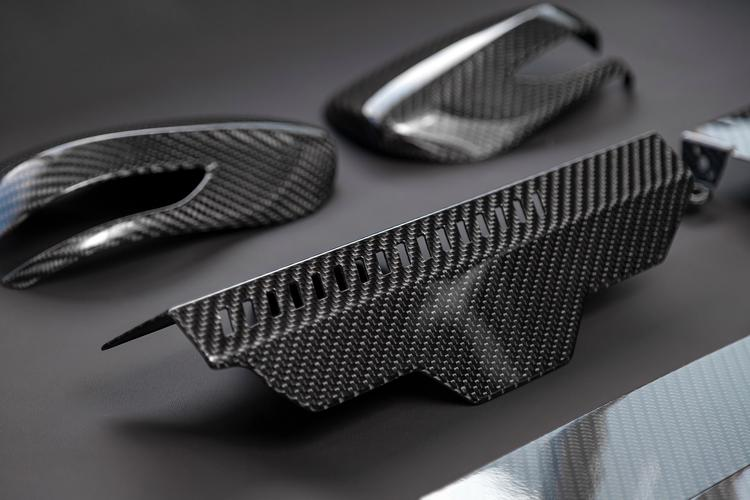
A shallow component with a manageable mold envelope may be a practical candidate for matched-tool pressing. A larger shell or a geometry developed around a single-sided tool may lead to a different assessment.
Check how the material will enter the tool and conform to the shape. Review ply movement, forming limits, air escape and potential bridging.
Consider the demolding path as carefully as the molding operation. A part that can be compressed successfully may still be difficult to remove without damage.
Hollow structures require specific tooling strategies; neither a conventional platen press nor an autoclave alone resolves internal consolidation.
Use a design-for-manufacture review to identify whether geometry changes would materially improve either route.
If the component is already customer-approved, determine which changes are permitted before redesigning tooling or selecting a new process.
Compare Tooling Through Its Full Production Role
Matched tooling can provide control over multiple surfaces, but it introduces requirements for alignment, thermal behavior, wear and dimensional maintenance.
Evaluate tool material, expansion, load capacity and connection arrangements. Check how it will be heated, cooled, loaded and serviced.
An autoclave tool must also satisfy thermal, vacuum and structural requirements. Bagging access and support features affect repeatability.
Compare the complete tooling package. Include nests, caul plates, locating fixtures, lifting arrangements, consumables and any support jigs required after demolding.
Tool life should be discussed as an application-dependent requirement, with a maintenance plan and inspection method. Avoid assuming an unverified number of cycles.
Also include the effect of design changes. A lower-cost tool may be useful during early development, while a more production-focused arrangement may suit a stable design.
The right choice depends on how long the product is expected to run and how likely its geometry is to change.
Compare Heat Transfer and Complete Cycle Time
A press often heats through contact with the tooling. An autoclave heats through the chamber environment and tooling arrangement.
The practical result depends on tool mass, contact, insulation, airflow and the material stack. Neither equipment setpoint alone defines the temperature history inside the component.
For each route, identify the measurement points used to start and complete the critical stages.
Compare loading, heating, holding, cooling and unloading under representative conditions. If a hot tool is used repeatedly, include the procedures and fixtures needed to support that sequence.
Do not compare a press cure dwell with an entire autoclave cycle. Similarly, do not compare a lightly loaded autoclave demonstration with a press working at full production utilization.
Use the complete repeating production sequence and state what activities occur outside it.
The comparison should explain the operating assumptions clearly enough for another engineer to reproduce the calculation.
Compare the Processes Across Practical Decision Criteria
| Criterion | Hot-press route | Autoclave route |
|---|---|---|
| Pressure application | Mechanical load transferred through tooling | Chamber pressure acting on a bagged assembly |
| Geometry review | Tool closure, load path and demolding are central | Tool support, bagging access and consolidation are central |
| Surface control | Matched tools can define opposing surfaces | Tool-side finish and bag-side requirements need consideration |
| Production organization | Repeated tool cycles and station planning | Batch loading and chamber scheduling |
| Material selection | Requires a material and cycle suited to pressing | Requires a material and cycle suited to autoclave processing |
| Cost drivers | Tooling, force capacity, thermal system and handling | Tooling, chamber capacity, utilities, consumables and loading |
| Validation | Must demonstrate specified part properties | Must demonstrate specified part properties |
This table supports initial screening. It does not replace a detailed review of the actual part.
A production line can also combine methods. For example, preforming or consolidation may occur before a later operation. Define the boundary of the equipment being purchased so process responsibilities remain clear.
Evaluate Quality Beyond Appearance
A glossy carbon fiber surface does not establish structural quality.
Choose inspection methods around the component’s functional requirements. Depending on the application, evaluation may include dimensions, laminate condition, cure state, void assessment, mechanical testing and nondestructive inspection.
Define which outcomes are required for qualification and which will be monitored during routine production.
Material handling matters in both processes. Gurit’s prepreg guidance addresses storage, outlife, contamination, lay-up and process records, demonstrating why equipment choice cannot be separated from material control.Gurit epoxy prepreg processing guide
Use representative material and geometry during development. A flat coupon can help investigate material behavior, but it may not reproduce a corner, thickness transition or insert in the finished part.
Where coupons are used, explain what they represent and which component-level questions remain.
An objective comparison holds both manufacturing routes to the same relevant acceptance requirements.
Evaluating a press-based route for your component?
Send KLT the material designation, part drawing, mold information and required inspection criteria. Include the current process and the specific problem you want to improve.
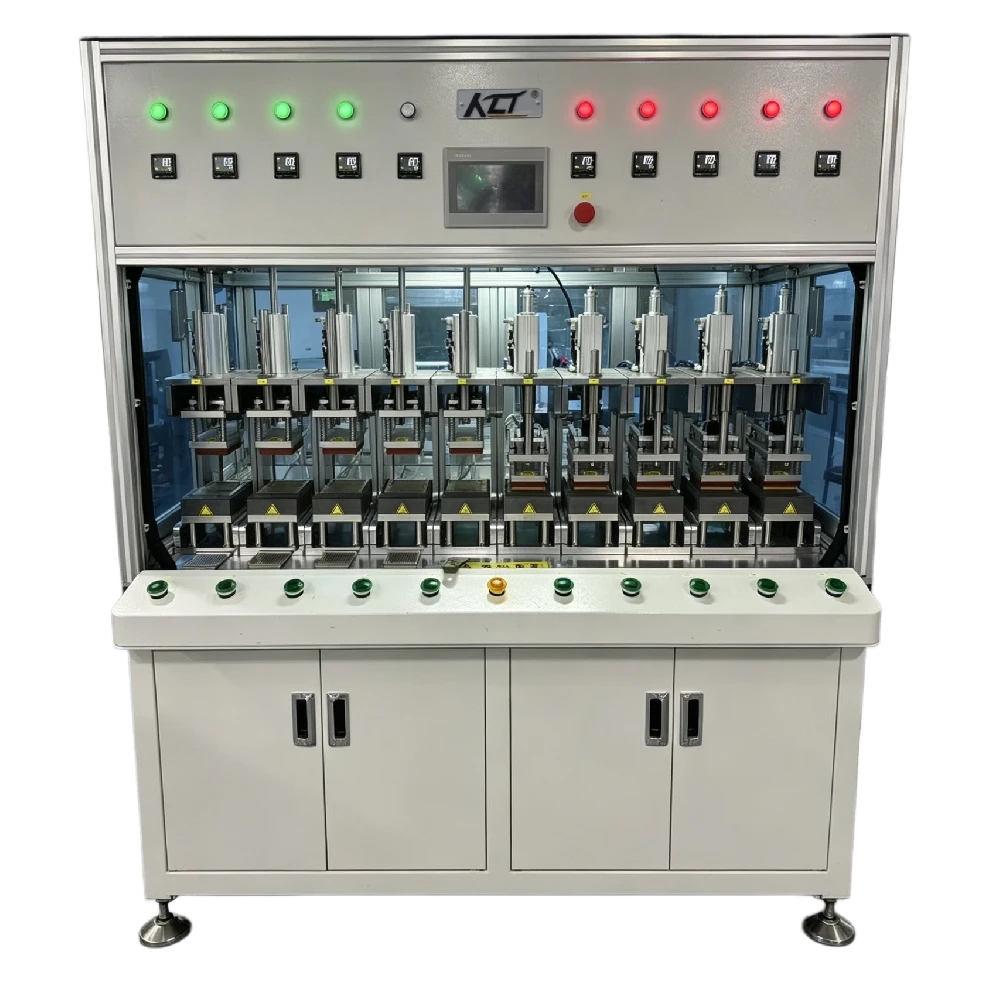
Evaluating a Carbon Fiber Hot Press?
Share your material, component drawing and current production route to discuss a press-based equipment configuration.
Send My Project DetailsTreat Repeatability as a Production Requirement
A successful first part is a development milestone. Production approval requires evidence that the process can be repeated under the agreed conditions.
Define the material lots, operators, tool conditions and run sequence relevant to the evaluation.
For a press, record the recipe, relevant temperatures, force history and cycle identification. For an autoclave, retain the corresponding process records required by the approved procedure.
Track results by component and run rather than reporting only an average.
Investigate whether defects correlate with tool position, local geometry, material handling or process transitions. The same nominal recipe can produce different outcomes if the surrounding conditions change.
Agree how deviations will be handled. Decide when a cycle can be reviewed, when a part must be rejected and when a recipe change requires approval.
This makes repeatability a measurable engineering requirement rather than a general equipment claim.
Calculate Output at the Production-System Level
A faster molding step does not necessarily create a faster factory.
For a press-based route, examine cutting, lay-up, preforming, loading, cooling, trimming and inspection. A short cure can leave the press waiting for prepared charges.
For an autoclave route, consider batch formation, tool availability, loading patterns and the schedule of other products sharing the chamber.
Calculate saleable parts over a representative shift or production period.
Document assumptions for staffing, uptime, first-pass yield and changeovers. If several products share the equipment, model the expected mix.
A useful capacity study also considers recovery after disruption. Ask how production resumes after a tool issue, utility interruption or rejected batch.
Choose equipment that addresses the demonstrated bottleneck. Purchasing additional force capacity or a larger chamber may not improve output if material preparation remains the limiting operation.
Compare Cost per Accepted Part
Use a common costing boundary and production volume.
A practical model includes:
Cost per accepted part = Relevant production cost ÷ Accepted parts produced
Relevant costs may include material, labor, consumables, energy, tooling amortization, maintenance, inspection and attributable scrap.
Keep development and qualification costs visible. A new route may require tooling trials, additional tests and customer approval before saleable production starts.
Evaluate utilization carefully. A machine running one short shift cannot be assessed with the same assumptions as equipment shared across several stable product lines.
Avoid universal percentage claims about energy or cost savings. Their validity depends on the equipment, product, loading pattern and local operating conditions.
Where a supplier provides an estimate, request its assumptions and measurement boundary.
A useful sensitivity check changes production volume, yield and labor input to see whether the preferred option remains attractive when conditions vary.
Understand What a Process Change Requires
Replacing an autoclave route with hot-press molding is a manufacturing change, not simply an equipment substitution.
Review material approval, ply architecture, tooling, dimensions and inspection requirements. Determine which characteristics might change and what evidence the customer needs.
Start with an agreed trial plan. It may progress from material or coupon studies to representative features and then complete parts.
Identify the responsible approval authority before committing to production equipment. A technically promising sample does not automatically authorize a process change for a customer-controlled component.
Retain a clear comparison between the current route and the proposed route. Use equivalent test conditions and explain differences in sample preparation.
If the existing process is unsuitable, consider other manufacturing methods as well. Pressing and autoclave molding are two options within a broader composite-processing landscape.
The best route is the one that satisfies the component requirements with an acceptable production and qualification plan.
Write an Equipment Brief That Supports a Decision
For a carbon fiber hot-press inquiry, provide:
- Material designation, resin system and processing instructions.
- Part drawing, lay-up information and critical features.
- Mold dimensions, mass and expected loading method.
- Required force or pressure assumptions.
- Heating, holding and cooling requirements.
- Target output and expected product mix.
- Inspection and traceability requirements.
- Factory-test scope and installation conditions.
Separate known inputs from questions requiring trials.
During factory testing, review actual records and the corresponding inspected parts. Identify what will be repeated during site acceptance after installation.
For shipment inspection, confirm equipment identity, tooling or accessories included, documentation, spare parts and packing condition.
Installation preparation should cover utilities, tool handling, service access and the surrounding production workflow.
These details make the proposal easier to compare and help prevent a technically capable machine from becoming difficult to use in the intended factory.
FAQ
Can a hot press replace an autoclave for carbon fiber parts?
Sometimes, when the material, geometry and tooling support a qualified press process. Confirm customer approval requirements and demonstrate the required component properties before changing the route.
Which parts are candidates for hot-press molding?
Parts that can be formed, consolidated and demolded through a suitable tooling arrangement may be candidates. Geometry, material flow and local thickness require review.
Does higher pressing pressure improve laminate quality?
Not automatically. Unsuitable pressure can affect resin distribution, fiber position or tooling behavior. Follow the material process requirements and validate the actual component.
Is autoclave molding always better for structural components?
No universal rule applies. Structural suitability depends on the qualified material-and-process system and demonstrated properties, rather than the equipment category alone.
Can thermoset and thermoplastic materials use the same cycle?
No. Their processing mechanisms differ. Each material system requires its own suitable thermal sequence, consolidation conditions and validation.
How should buyers compare cost?
Compare cost per accepted part using equivalent production volumes, quality requirements and costing boundaries. Include tooling, qualification, labor, utilities, consumables and scrap.
Conclusion
Choose between a carbon fiber hot press and an autoclave by evaluating the component, material and production system together.
The decision should explain how the laminate receives heat and pressure, how tooling controls the part, which inspections demonstrate quality and what approval is required.
A representative trial and transparent cost model provide a stronger purchasing basis than general claims about speed, surface finish or manufacturing cost.
Discuss Your Carbon Fiber Molding Project
KLT offers hot-press equipment for carbon fiber composite molding applications. Share your material instructions, component drawing, tooling details and production goals to discuss whether a press-based configuration fits your project.
Continue your equipment review
Evaluating a Carbon Fiber Hot Press?
Share your material, component drawing and current production route to discuss a press-based equipment configuration.
